
Gates County Arrest Records and Court Charges
Arrest records in Gates County are created on the law-enforcement side of a criminal matter. The Gates County Sheriff's Office, led by Sheriff Ray Campbell, handles criminal enforcement, traffic enforcement, civil papers, domestic violence protective order service, and court security from 202 Court Street in Gatesville. A booking or arrest entry may identify the person taken into custody, the arresting agency, the date, and the alleged offense, but that record does not by itself show whether a prosecutor later filed, amended, dismissed, or proved a charge in court.
Court charges after arrest belong to the North Carolina General Court of Justice record stream. Gates County cases are handled through Superior Court and District Court at the Gates County Courthouse, with the Clerk of Superior Court maintaining criminal case files and public terminals. The District Attorney for Prosecutorial District 1 prosecutes state criminal charges for Gates and nearby counties. The DA's role is separate from the sheriff's role: deputies may investigate, arrest, and serve process, while prosecutors decide how to proceed in court, negotiate pleas, dismiss or amend charges, and present felony matters.
For custody or booking status, use the Gates County inmate records route, which points detainee lookups to Albemarle District Jail and VINE/VINELink. For the full criminal file, including motions, pleas, sentencing, and final judgment, use criminal court records. For broader civil, probate, traffic, and judgment searches, use the main court records page.
The N.C. Department of Adult Correction explains its public offender search tools at the DAC criminal offender searches page.
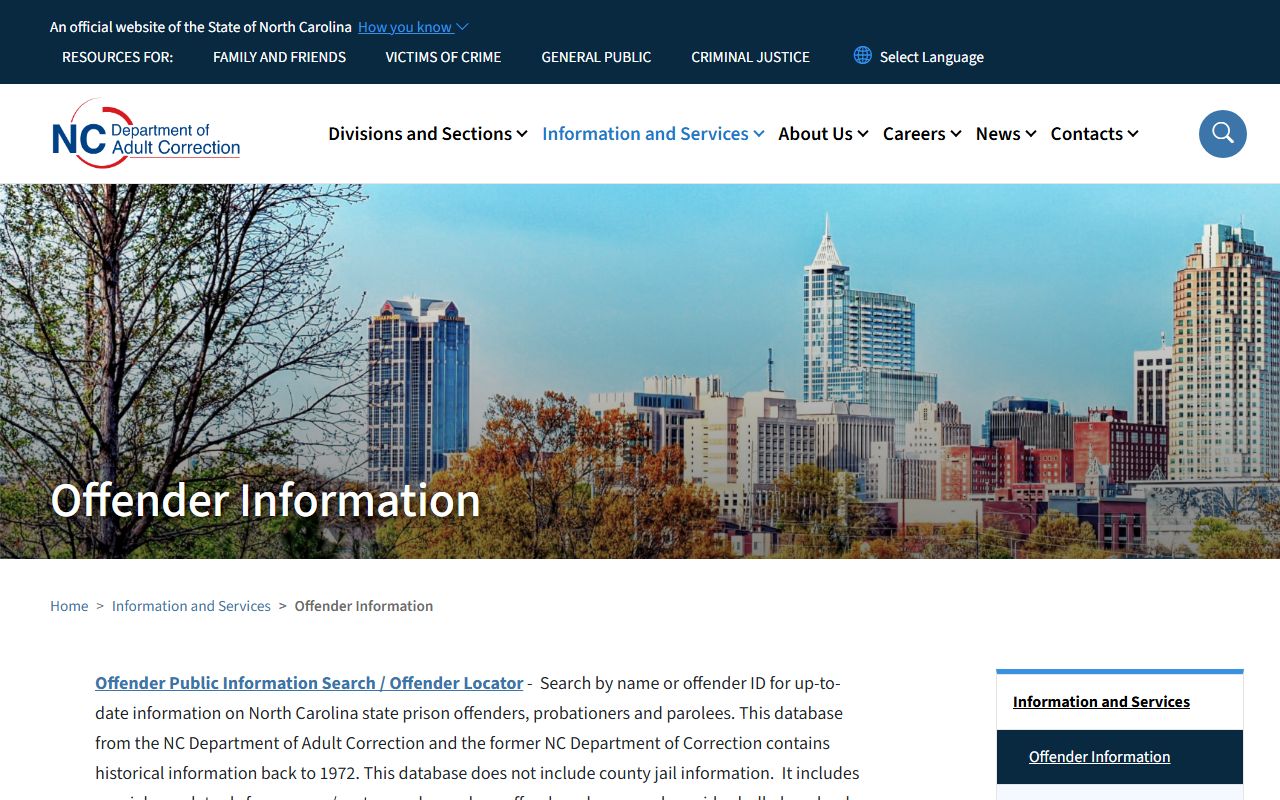
That source is useful after a Gates County case results in prison, probation, or parole supervision, but it is not a substitute for the Gates County court charge file maintained through the Clerk of Superior Court.
How to Find Gates County Arrest Records and Charges
The main online path for court charges is the North Carolina eCourts Portal. Smart Search accepts a record number or a party name in Last, First Middle Suffix format, and Advanced Filtering Options can narrow the location to Gates County. The Portal can show public case information, hearing entries, payments, and some charge details, but older paper files, sealed materials, restricted juvenile matters, and documents not available online may require the Clerk of Superior Court.
- Open the eCourts Portal and choose Smart Search for case records or Search Hearings for court-date information.
- Search by defendant name, record number, or citation number if the arrest was tied to a traffic or infraction matter.
- Use Advanced Filtering Options to select Gates County and narrow by case type, file date, or status when those filters are available.
- Read each charge line separately, because one arrest can produce multiple charges with different statuses, bond conditions, and dispositions.
- Call the Clerk of Superior Court at (252) 357-1365 or visit 202 Court St., Gatesville, NC 27938, when the online record is incomplete.
Judicial Branch guidance says criminal case information can also be accessed from a public self-service terminal at a clerk of court's office in any county, with searches by defendant name, case number, or victim/witness name. The full paper file is handled in the county where the case is located. Gates County court users should treat the Portal as the first search channel and the Clerk of Superior Court as the official fallback for file inspection, copies, certified copies, and older case retrieval.
How Charges Get Filed After an Arrest
After an arrest, the charge record may begin through a warrant, magistrate order, citation, criminal summons, indictment, or other charging document recognized in North Carolina practice. District Court generally handles misdemeanors, infractions, and preliminary felony matters. Superior Court handles felony trials and some matters after indictment or transfer. Magistrates are District Court officers who may handle preliminary criminal process, initial appearances, release conditions, and small claims in civil matters.
| Record or action | Where it fits in Gates County | What to verify |
|---|---|---|
| Arrest or booking record | Law-enforcement and custody side, usually through the sheriff, jail, or VINE route. | Custody status, booking date if available, arresting agency, and release or transfer status. |
| Warrant, magistrate order, or citation | Criminal process that may start or support a District Court case. | Charge language, case number, bond or release condition, and next court date. |
| Indictment or felony filing | Superior Court stage for felony prosecution. | Whether charges were added, reduced, superseded, dismissed, or resolved by plea or trial. |
The DA for Prosecutorial District 1, Jeff Cruden, is listed in the Gates County court directory at (252) 331-4530. The DA office is not the public copy desk for court files, but its charging decisions explain why an arrest description and the later court charge list may not match exactly. A charge can be amended, consolidated, dismissed, or replaced as the case moves forward.
Federal criminal matters from Gates County are handled outside the county court file; the Eastern District of North Carolina uses CM/ECF, shown at the federal CM/ECF login page.
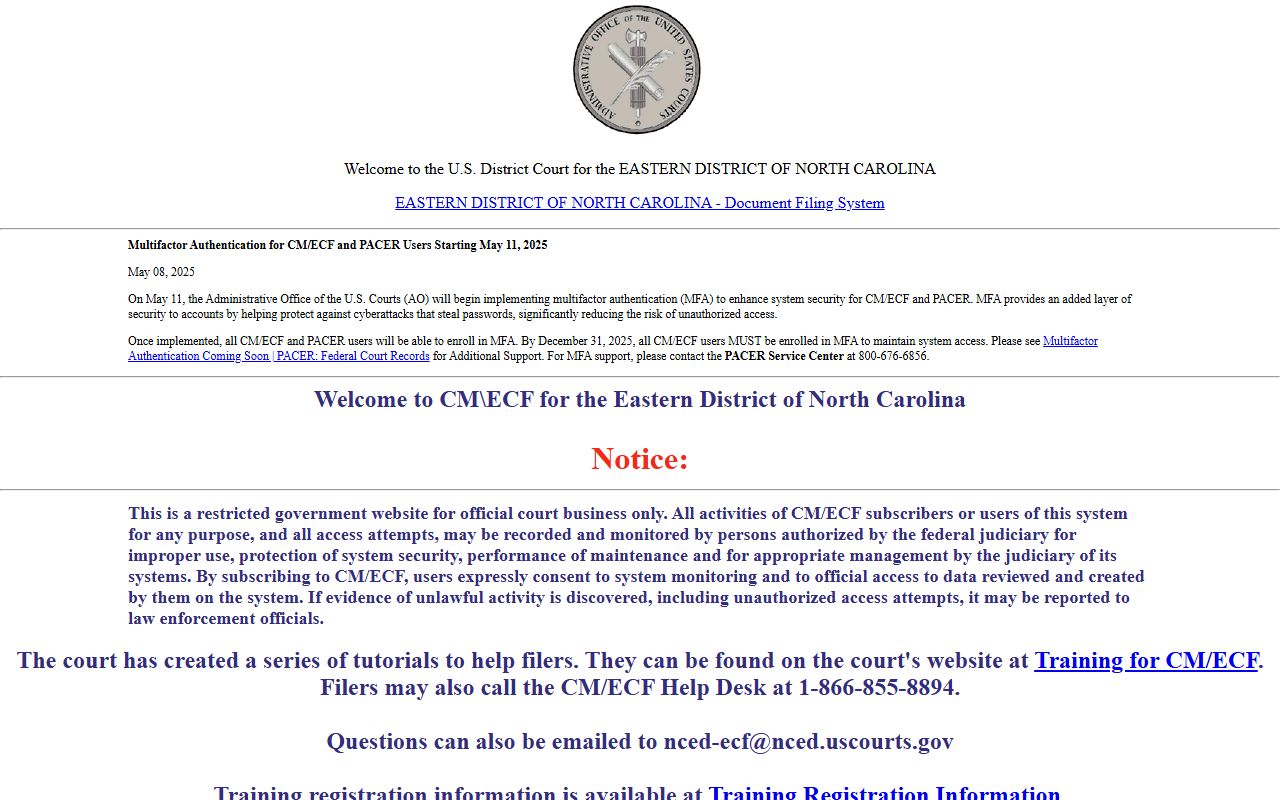
Use federal court systems only when the arrest or charge is actually federal; most Gates County misdemeanors, infractions, and state felonies remain in North Carolina District Court or Superior Court.
Charge Status and What It Means
Charge status is the part of the record that keeps an arrest from being read too broadly. A charge may be pending while the next hearing is scheduled, disposed when the court has entered an outcome, dismissed if the prosecution or court ended that charge, or amended if the prosecutor changed the charge before resolution. The Portal may show public status information, but the paper file or clerk terminal may be needed to understand the sequence of filings.
| Status | What It Means |
|---|---|
| Pending | The charge remains active, and the case may still have hearings, motions, plea negotiations, or trial settings. |
| Amended or reduced | The charge changed from the original arrest or filing, often because of prosecutorial review, plea negotiation, or court ruling. |
| Dismissed | The charge ended without a conviction on that charge; dismissal details should be read from the case docket and disposition. |
| Disposed | The court has entered an outcome, such as conviction, dismissal, deferred result, or other final disposition. |
Charges vs. Convictions
A charge is an accusation in a court case. A conviction is an outcome after a guilty plea, verdict, or other finding that establishes guilt or responsibility. Gates County arrest records may show why someone entered custody, but the court record must be checked for the final disposition. This distinction matters for employment, housing, licensing, firearm eligibility, immigration questions, and personal record review, because an arrest or filed charge may have been dismissed, reduced, expunged, or resolved differently than the initial allegation suggested.
| Charge | Conviction | |
|---|---|---|
| Stage | Accusation filed or entered in a criminal case. | Final or operative finding after plea, verdict, or judgment. |
| What to check | Charge text, statute, level, case number, and current status. | Disposition, judgment, sentence, probation, fines, costs, and appeal entries. |
| Public record limits | May be visible unless sealed, expunged, juvenile, or otherwise restricted. | May be visible unless restricted by expunction, sealing, juvenile confidentiality, or another law. |
Sealed vs. Expunged Records
North Carolina law treats some criminal and juvenile records as confidential, sealed, or eligible for expunction. Juvenile court records are generally confidential, and abuse, neglect, and dependency records are withheld from public inspection except by court order or listed statutory access. Expunction rules are controlled by eligibility requirements, waiting periods, prior record limits, and court orders. A person should not assume that a dismissed Gates County charge automatically disappears from every public or agency database without checking whether an expunction order was entered.
| Sealed or restricted | Expunged | |
|---|---|---|
| Visibility | Hidden from ordinary public inspection because of case type, court order, or confidentiality law. | Removed, sealed, or treated under the specific expunction order and statute. |
| Common examples | Juvenile records, mental health matters, adoption records, and sealed filings. | Eligible dismissed charges or certain nonviolent convictions when statutory requirements are met. |
| Where to ask | Clerk of Superior Court or the court that restricted the record. | North Carolina Judicial Branch expunction forms and the Clerk of Superior Court. |
Charge Codes and Severity Levels
Gates County criminal entries can include misdemeanors, felonies, and infractions. District Court generally handles misdemeanors, infractions, traffic matters, and preliminary felony steps. Superior Court handles felony prosecutions and trials. One arrest can produce several separate charges, and each charge can carry its own statute reference, severity level, bond condition, court date, and outcome. A traffic stop, for example, may produce an infraction, a misdemeanor impaired-driving charge, and separate failure-to-appear entries if the person misses court later.
When a case is federal rather than state, the PACER court lookup for the Eastern District of North Carolina identifies the federal CM/ECF court system.
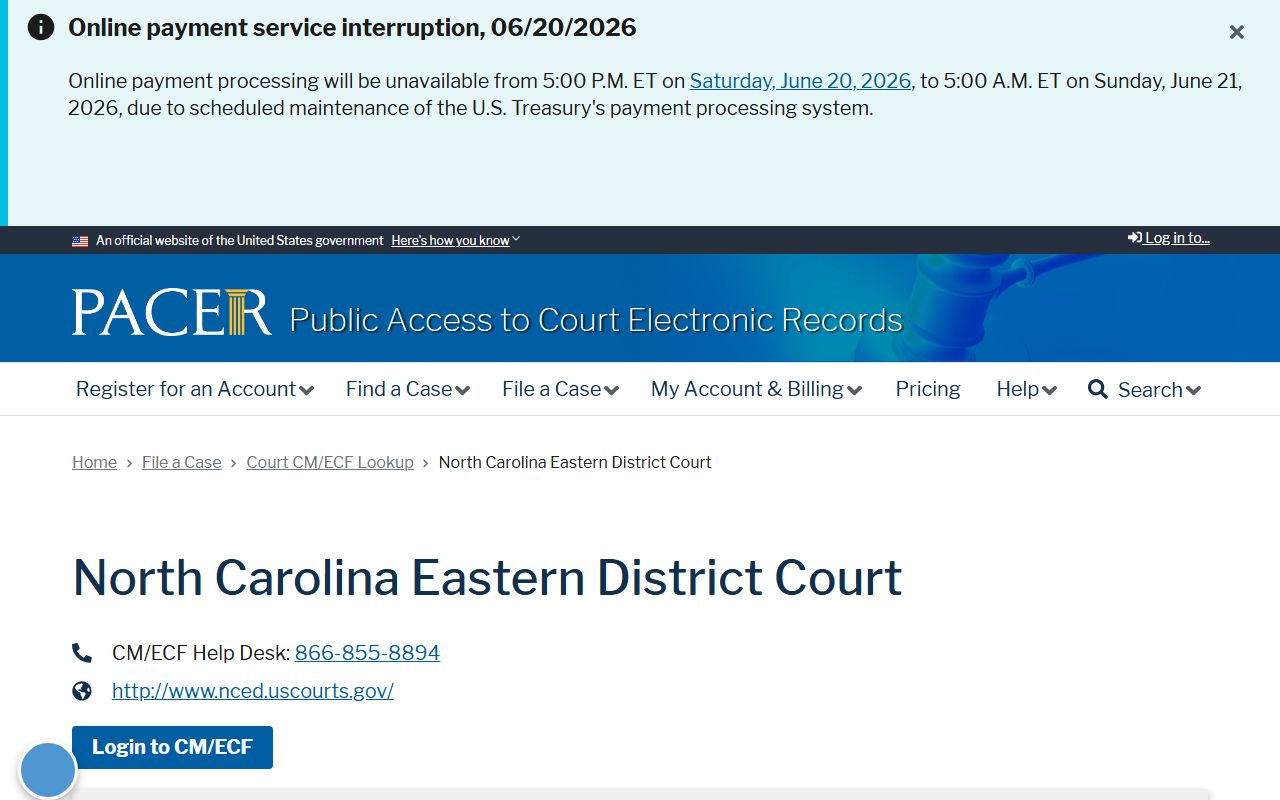
That federal lookup belongs beside, not in place of, Gates County Superior Court and District Court searches for ordinary state criminal charges.
Statewide Charge and Criminal History Lookups
Statewide tools answer different questions. The eCourts Portal searches public North Carolina court case information and hearing information. The N.C. Judgment Search indexes judgments under G.S. 7A-109(b)(6). The N.C. Department of Adult Correction offender search covers state prison, probation, parole, and historical DAC information, not every county arrest. VINELink/VINE is a custody and notification tool. For a Gates County arrest-to-charge question, combine the sheriff or custody route with eCourts and clerk access instead of relying on one statewide database.
Background Check Considerations
Judicial Branch guidance says background checks should use the county clerk's office rather than treating the Portal as the official background-check product. For Gates County, that means contacting the Clerk of Superior Court at (252) 357-1365 or visiting the courthouse for the proper record process. Public case searches can help a person understand charge history, but a casual lookup can miss sealed files, expunged records, identity mismatches, older paper records, and cases filed under name variants.
Important: This website is not a consumer reporting agency and cannot be used for FCRA-regulated screening decisions.
Restricted Charge Records in Gates County
Not every arrest, charge, police report, or investigative file is public. G.S. 132-1.4 limits access to criminal investigation and intelligence records compiled by law enforcement, which means a sheriff's investigative file is different from the public court record. Juvenile court records are confidential under North Carolina law, and mental health, adoption, sealed, and expunged matters can be withheld. For official copies, file inspection, or certification, the Clerk of Superior Court remains the correct Gates County court contact.